
Certain scientists propose a novel method in the search for extraterrestrial life. They aim to analyze lunar soil, or regolith, to find microscopic technosignatures—tiny artificial particles that could have traveled through space from ancient alien civilizations and settled on the Moon’s well-preserved surface.
Certain thinkers continue to believe that humanity is not alone in the vast cosmos. Lunar dust might hold clues about civilizations that existed long before our own. A research team suggests analyzing Moon soil to search for microscopic particles produced by extraterrestrial technology.
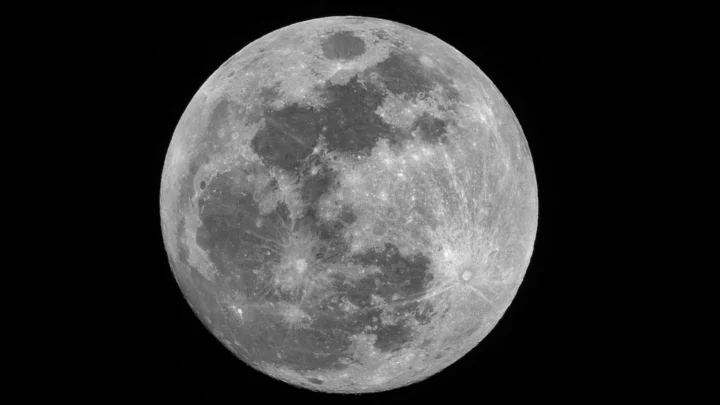
No evidence has been found yet, but scientists present a way to test the hypothesis.
The research, led by Lewis Pinault, an associate researcher at the SETI Institute, focuses on microscopic technosignatures: small fragments of artificial materials that could have traveled through space and ended up on the lunar surface.
The work is available as a pre-print and is under evaluation by the journal International Journal of Astrobiology, according to the SETI Institute.
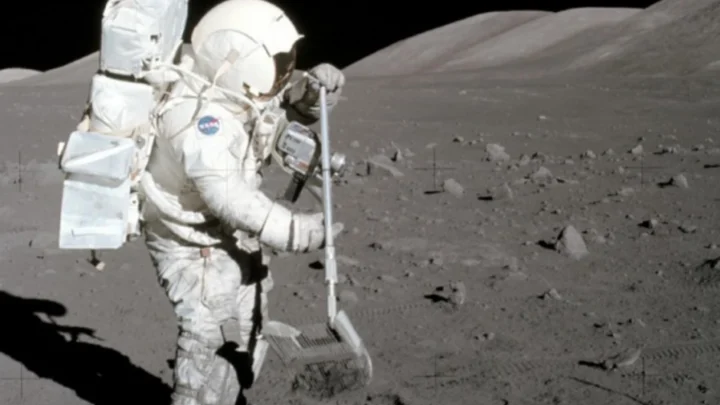
The Moon as an Archive of Ancient Civilizations
The proposal stems from a phenomenon we know from our own technology. Satellites degrade in the space environment and can release particles. If other civilizations developed structures in space, something similar might have occurred.
Over extremely long periods, a small portion of this debris could disperse and reach the Moon. The team intends to investigate this possibility.
Our natural satellite offers favorable conditions for this search. Its low level of geochemical alteration and exposure to space for roughly four billion years make it a potential reservoir of ancient particles.
This approach could, in theory, search for traces of now-extinct civilizations, whose materials might have outlived their creators. This is one of the possibilities explored in the scientific paper.
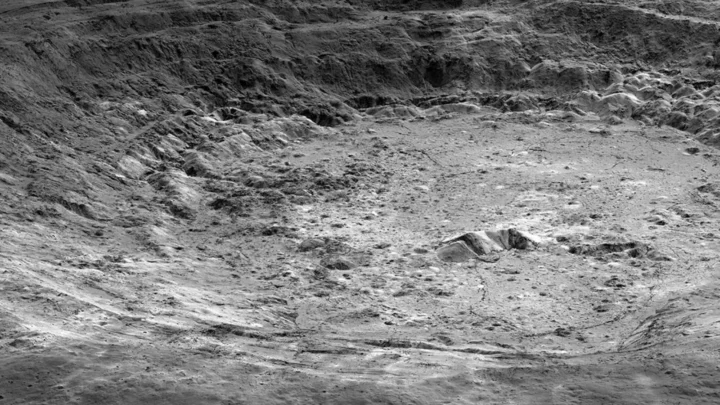
One Cubic Meter of Lunar Soil Under Analysis
The researchers propose examining approximately one cubic meter of regolith, the layer of dust and rocky fragments covering the lunar surface.
The analysis would combine microscopy, tomography, spectroscopy, and imaging tools supported by artificial intelligence. The goal would be to select unusual particles for more detailed investigation. Future samples from the Artemis and Chang’e programs, along with analyses performed on the Moon itself, could help test this approach, according to the SETI Institute.
The challenge would be demonstrating the origin of any suspicious fragment. Beyond natural materials, debris left by human missions themselves must be considered. Finding something unusual would not, by itself, be enough to conclude it is extraterrestrial technology.
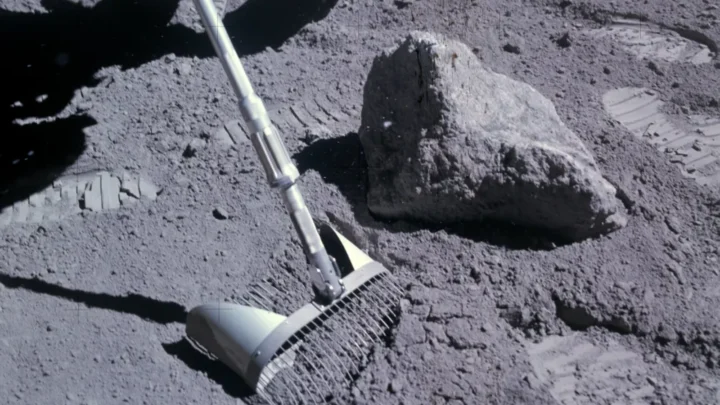
Even Finding Nothing, the Research Would Be Useful
The authors also studied how very small particles could traverse interstellar space and, under certain conditions, survive arrival in the Earth-Moon system.
According to their models, a search yielding no results could help establish limits for the quantity of long-lasting artificial debris dispersed across the galaxy. These conclusions would depend on assumptions about the production, transport, and preservation of the materials; they would not generally exclude the existence of other civilizations. The framework is described in the study available on arXiv.
The proposal adds another possibility to the search for extraterrestrial intelligence: investigating whether lunar dust preserves any material trace of such activity. For now, it remains a hypothesis to be tested.